
⭐️⭐️⭐️⭐️⭐️ Rated 4.8/5 by 2,000+ Customers
Opal Daylight
Opal Daylight
Couldn't load pickup availability
For the hours before sunset. The Daylight lens filters the HEV light that builds eye strain across a long screen day — the burning, the dryness, the vice-grip headache by 4pm — without distorting the colors you need to see clearly. Soft yellow tint. Full color accuracy. Wearable from your first meeting to your last. Think of it as the layer of protection that makes the screen day sustainable so the Nighttime lens can do its job when it matters most.
Share

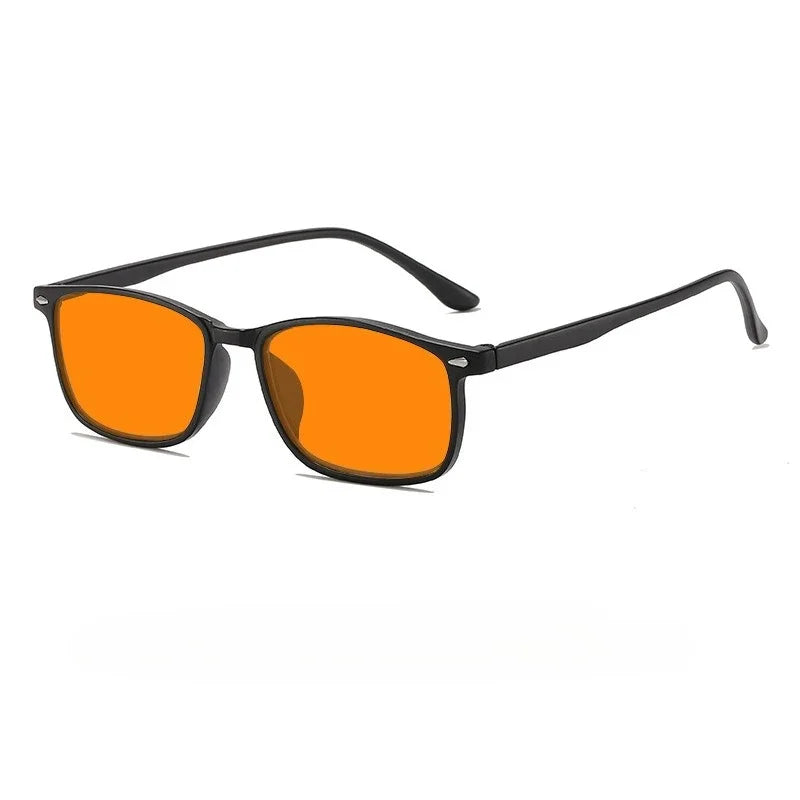
Your screen has a 20-nanometer problem. This fixes it.
The 460–480nm band your LED screen emits at 11pm activates a receptor in your retina that shuts down melatonin and tells your brain it's midday. You can't discipline your way past a photoreceptor.
Opal EyeWear blocks that exact window — not all blue light, just the 6% that's wrecking your sleep — while preserving full color above 500nm. Professional frame. Wearable anywhere.
248 circadian scientists. 30-night guarantee. Nothing "NOT COVERED."
Why Use Opal?
It targets the right problem
Not "blue light" in general — the precise 460–480nm band that shuts down your melatonin. Most glasses miss it entirely. Ours block nothing else.
You can actually wear it
Italian acetate frame. Looks like normal designer eyewear. Boardroom, Zoom call, dinner. Not a gamer headset. Not a ski instructor.
The science is real
248 circadian scientists. Harvard melatonin research. Peer-reviewed sleep trials. We lead with sleep — not eye strain — because that's where the evidence lives.
You risk nothing finding out
30 nights. If your mornings aren't measurably different, return it. Full refund. No fine print. Nothing "NOT COVERED."
What people are saying...
-
"I don't wake up reaching for coffee anymore."
Three nights. That's all it took. My Oura readiness had been sitting at 61 for months — I'd tried f.lux, Night Shift, Felix Gray, melatonin gummies that left me feeling drugged. Nothing moved the needle.
-
The first pair I've ever worn on a Zoom call without someone asking what's wrong with my glasses.
I'd used Swannies for a year. They worked — my sleep was genuinely better. But I'm a creative director. I can't have orange lenses on client calls. I can't wear them at dinner. So they sat on my desk and only came out at home. These go everywhere. Nobody notices them. And my sleep is still better.
-
My Whoop recovery hasn't been below green in three weeks.
I'd read the Cleveland Clinic piece. I thought the whole category was marketing dressed up as science. My partner convinced me to try one more time. I told her I'd send them back in a week. That was five weeks ago. The data doesn't lie — and neither does waking up before your alarm feeling like an actual human being.
FAQs
Do blue light glasses actually work? Cleveland Clinic says they don't.
Cleveland Clinic is right — about clear lenses and eye strain. That's what the Cochrane review studied: 17 trials, clear-tinted glasses, eye fatigue. Little evidence. We agree. That's not our claim. Opal's Nighttime lens targets melatonin and circadian timing — a separate mechanism, separate studies, separate evidence. 248 circadian scientists, Harvard melatonin research, and a 2024 meta-analysis all point the same direction. The skeptics' bullets land on the wrong product.
I already tried other brands. Why is this different?
Most companies clear lenses block roughly 20% of blue light and miss the 460–480nm suppression window almost entirely. Great frame. Zero circadian effect. Some do block the right window — which is why some people see results — but the heavy orange tint destroys color accuracy above 550nm, making them unwearable for any screen-based work. Opal's Nighttime lens is calibrated to block the suppression window and nothing else. Full color preserved above 500nm. Different lens, different outcome.
What's the difference between the Daylight and Nighttime lens?
The Daylight lens is a soft yellow tint designed for long screen days — it filters HEV light and reduces eye strain while keeping full color accuracy for design, video, and professional work. The Nighttime lens is a deep amber that precision-blocks the 460–480nm Melanopsin Suppression Window. Wear it for 2–3 hours before bed. This is the lens that shows up in your Oura score.
What does the 30-night guarantee actually cover?
Everything. Wear the Nighttime lens every evening for 30 nights. If your mornings aren't measurably different — less groggy, more rested, more energy through the day — return it for a full refund. No questions, no hoops, nothing hidden in the fine print. We're aware of what happened with a competitor's warranty where glasses broke after six weeks and it was "NOT COVERED." Ours isn't like that. The guarantee covers performance. The warranty covers breakage. Both are real.